October 19, 2026
How to tell an assembly plant from a fabrication plant in satellite imagery
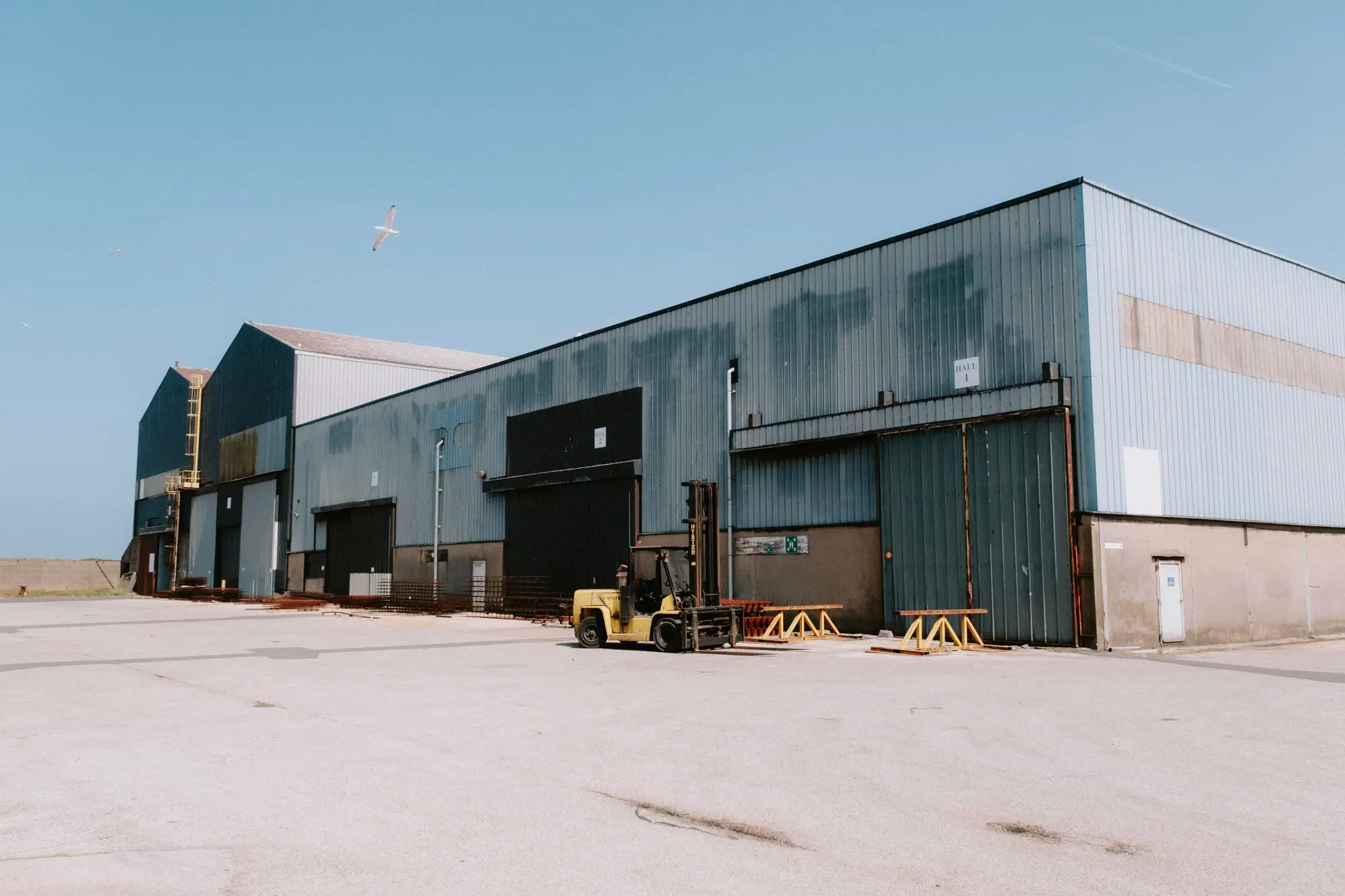
A directory listing will tell you a facility makes "automotive components" or does "metal fabrication." It won't tell you whether the building in front of you runs a stamping line with a scrap yard out back or a final-assembly hall with two thousand cars worth of parking. If you're building a dual-source shortlist off a reference supplier, that distinction matters more than the SIC code does, because a fabrication plant and an assembly plant leave almost opposite footprints on the ground.
Roofline and bay structure tell you what happens inside
Fabrication buildings, the shops doing cutting, stamping, forging, or welding, tend to show saw-tooth or monitor roofs, the stepped ridgelines that let smoke and heat vent and daylight in from the north side. You'll also see taller, narrower bays running perpendicular to the main structure, because overhead cranes need clearance to move stock and dies around. The building footprint is often irregular, built up in additions as the shop added press lines over decades.
Assembly plants read flatter. A single flat or low-slope roof over a huge rectangular or L-shaped footprint is the norm, because the floor underneath is one long, uninterrupted conveyor line rather than a cluster of separate process bays. You won't see much roof articulation at all. If the building looks like one enormous shed with a few HVAC units scattered across the top, that's an assembly tell, not a fabrication one.
Yard contents give away the production stage
This is usually the fastest check, and the one that separates a real plant-type call from a guess. Fabrication sites hold raw and semi-finished material: coil racks, billet stacks, structural steel laid out in bays, sometimes a scrap yard with visible cut-offs and turnings near a dedicated scrap handler's dock. The yard looks like inventory in process, uneven in shape, stacked, often under open-air cover rather than parked in rows.
Assembly plants hold finished or near-finished units staged for outbound shipment, and those sit in tidy, repeating rows: a finished-vehicle lot, a trailer yard, a pallet of packaged equipment lined up by model. If what's sitting in the yard looks like the end product rather than input material, you're almost certainly looking at assembly. Rail spurs are a tiebreaker too. A spur running straight into a fabrication building usually feeds raw stock in; a spur at an assembly plant more often moves finished units out.
Parking field size as a labor proxy
Assembly is labor-intensive per square foot in a way most fabrication isn't anymore, especially where the fab shop has invested in automated cutting and press lines. That shows up as parking. An assembly plant with a workforce in the thousands will have a parking field to match, sometimes larger in footprint than the building itself, laid out in long striped rows close to the main entrance. A comparably sized fabrication plant usually gets by with a fraction of that lot, because headcount per square foot of floor is lower.
None of these signals works alone. A saw-tooth roof with a thin parking lot and a scrap yard is a strong fabrication read. A flat-roofed shed with acres of striped parking and rows of finished units out back is a strong assembly read. Where the signals disagree, which happens more than you'd like once a site has been retrofitted or expanded, you're back to a judgment call based on scale and logistics access.
That judgment call is exactly what slows down a dual-source search when you're starting from a directory list or a trade-fair floor with no physical reference point. Sourcing Candidate Search runs the comparison against a supplier you already trust, showing each candidate site next to the reference plant so the roofline, yard, and parking read side by side instead of from memory.
If you've got a reference supplier in mind and a region to search, that's the shortlist worth building next.